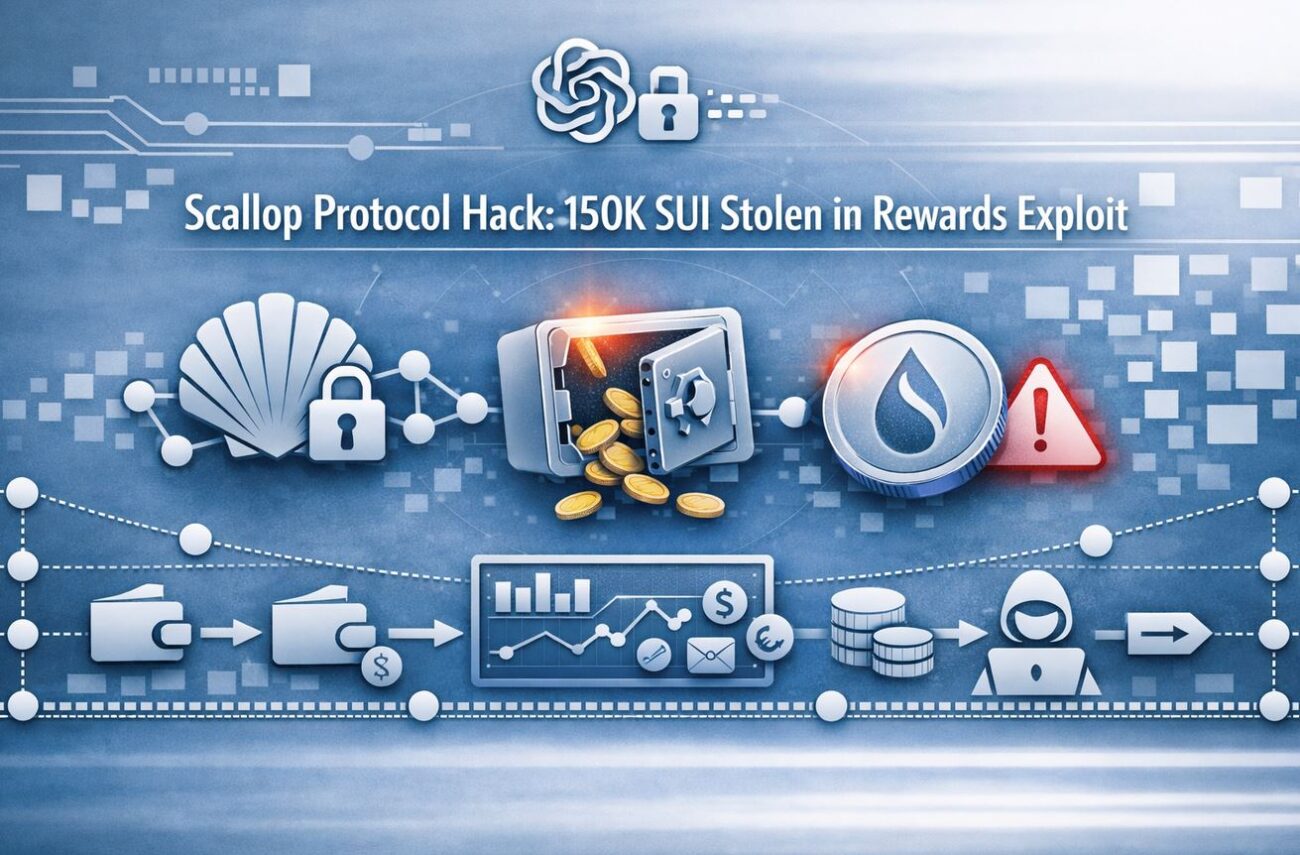
In the high-stakes world of Decentralized Finance (DeFi), even decommissioned code can pose a catastrophic risk. On April 27, 2026, the Scallop lending protocol, a cornerstone of the Sui blockchain, became the latest victim of a targeted exploit.
Hackers managed to drain approximately 150,000 SUI from the platform’s sSUI rewards pool. While the theft is significant, the project’s swift response and unique protocol architecture prevented what could have been a total collapse of the $22.8 million platform.
The Breach: Legacy Code as an Entry Point
The vulnerability did not lie within Scallop’s core lending engine or its main vaults. Instead, the attackers identified a flaw in a side smart contract that was no longer actively used for core operations but remained connected to the rewards ecosystem.
Key Details of the Attack:
- Target: The sSUI (Staked SUI) rewards pool.
- Asset Stolen: ~150,000 SUI.
- Method: Exploitation of a “dead” side contract that retained permissions to interact with reward distributions.
Scallop developers immediately initiated an emergency halt of all platform operations to conduct a full security audit. This “circuit breaker” successfully isolated the breach, ensuring that main protocol deposits and user collateral remained untouched.
The Recovery: Full Compensation and Resume Operations
Unlike many DeFi projects that struggle to reimburse victims, the Scallop team has taken a stance of radical accountability.
- 100% Reimbursement: Project representatives have pledged to cover 100% of the losses using their own treasury funds.
- Operational Status: Following a comprehensive security check, Scallop has resumed normal operations. Users are now able to deposit and withdraw assets with full functionality.
- Transparency: A “Post-Mortem” report is currently being drafted to provide a line-by-line analysis of the code failure and the steps taken to decommission legacy contracts permanently.
Market Impact: SCA and SUI Prices
The breach sent minor ripples through the Sui ecosystem, though the broader market remains stable due to the project’s quick containment of the issue.
| Metric | Current Value (April 27, 2026) | 24H Change |
|---|---|---|
| SCA (Native Token) | $0.017 | -2.5% |
| SUI Token | $0.93 | -1.8% |
| Total Value Locked (TVL) | $22.82 Million | Stable |
Export to Sheets
A Month of DeFi Turbulence
The Scallop incident is the third major DeFi breach in April 2026, marking a period of intense activity for on-chain attackers:
- April 17: Kelp (Liquid Restaking) hacked for $293 Million.
- April 22: Volo protocol compromised for $3.5 Million in WBTC/USDC.
- April 27: Scallop (Sui Lending) hacked for 150,000 SUI.
These events underscore a growing trend: attackers are moving away from simple “rug pulls” and toward sophisticated smart contract “primitive” exploits.
FAQs
1. Are my deposits on Scallop safe?
Yes. The Scallop team has confirmed that the core lending and borrowing vaults were not affected. Only the rewards pool was breached, and the team is covering those losses.
2. Can I withdraw my funds right now?
Yes. After a temporary suspension, the platform is back online and fully operational for all deposits and withdrawals.
3. What is sSUI?
sSUI is a receipt token representing SUI that has been supplied to the Scallop protocol. It allows users to earn interest and rewards while maintaining a liquid position.
4. How can Scallop afford to pay back 150,000 SUI?
Scallop maintains a dedicated insurance and treasury fund specifically for security incidents. This “backstop” allows them to maintain user trust without needing to liquidize the protocol.
Conclusion: The “Legacy Code” Lesson
The Scallop breach serves as a stark reminder for the entire DeFi industry: un-used code is still a liability. As protocols evolve, the thorough decommissioning of side contracts is just as important as the audit of new ones.
Action Item: Users are encouraged to re-verify their wallet permissions if they interacted with the rewards pool prior to April 27. While the protocol is secure, “hygiene” is the best defense in the 2026 DeFi landscape.
