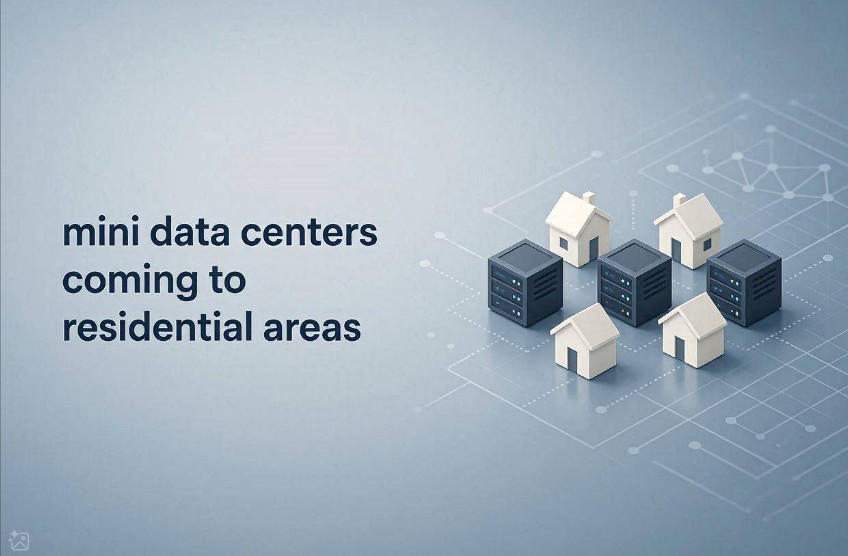
A new approach to solving the growing demand for computing power is emerging — and it might soon be located right next to your home. San Francisco-based startup SPAN has unveiled an ambitious concept that aims to decentralize data infrastructure by installing small, high-performance compute nodes directly in residential and small commercial spaces.
The initiative, called XFRA, is positioned as a “distributed data center solution” designed to bring compute capacity closer to where it is needed most, while also addressing infrastructure and energy challenges tied to traditional data centers.
What Is SPAN’s XFRA Solution?
SPAN’s XFRA model reimagines how data centers are deployed. Instead of building massive centralized facilities, the company plans to distribute smaller, enterprise-grade compute nodes across neighborhoods.
These nodes will be powered by advanced, liquid-cooled systems equipped with NVIDIA RTX PRO 6000 Blackwell Server Edition GPUs. This makes them capable of supporting high-demand workloads such as AI inference and cloud gaming — areas currently driving explosive growth in computing needs.
The company is partnering with major players, including Nvidia and homebuilders like PulteGroup, to roll out these systems starting later this year.
What’s in It for Homeowners?
To encourage adoption, SPAN is offering homeowners a compelling value proposition. Participating households will receive:
- A premium SPAN electrical panel
- Battery backup systems
- Optional solar integration
- Fixed, discounted rates for electricity and internet
The idea is simple: homeowners provide space and power infrastructure, and in return, they benefit from lower utility costs and enhanced energy resilience.
SPAN describes this as a “win-win” model — although public sentiment remains mixed, with nearly half of Americans historically opposing the construction of data centers near residential areas.
Why Distributed Data Centers Matter
The demand for data centers is growing at an unprecedented pace, fueled largely by advancements in artificial intelligence and cloud computing. Traditional data centers require years to build and depend heavily on large-scale infrastructure upgrades.
SPAN’s approach aims to bypass these limitations by enabling rapid deployment at the “grid edge” — using underutilized local power infrastructure to deliver compute capacity closer to end users.
For hyperscalers and AI cloud providers, this could mean:
- Faster deployment timelines
- Reduced latency for end users
- Flexible scaling without massive capital investment
Rather than replacing traditional data centers, XFRA is designed to complement them by accelerating capacity expansion where demand is highest.
Energy Challenges Driving Innovation
One of the biggest challenges facing the data center boom is energy consumption. In 2024, data centers accounted for over 4% of total electricity usage in the United States — a figure expected to exceed 9% by 2030.
This surge in demand is placing immense pressure on power grids and infrastructure. Expanding traditional data centers often requires building new high-voltage transmission lines and upgrading distribution systems — costs that are frequently passed on to consumers.
In regions like Northern Virginia, known as “Data Center Alley,” residents have already felt the impact. Reports show electricity prices in some areas have surged dramatically over recent years due to the concentration of data center activity.
To address these concerns, policymakers and industry leaders have begun taking action. In 2026, a “Ratepayer Protection Pledge” was introduced, aiming to ensure that data center operators bear the cost of infrastructure upgrades instead of passing them on to consumers.
Can This Model Solve the Problem?
SPAN believes its distributed approach offers a more sustainable path forward. By leveraging existing residential and local infrastructure, XFRA could reduce the need for large-scale grid expansions while bringing compute power closer to consumption points.
The company plans to begin with a 100-home pilot program this year, with long-term ambitions to scale up to 80,000 nodes across the United States. If successful, this network could deliver more than 1 gigawatt of distributed computing capacity.
However, the concept raises important questions:
- Will homeowners be comfortable hosting compute nodes on their property?
- How will noise, heat, and maintenance be managed?
- Can distributed systems match the reliability and security of centralized data centers?
These factors will play a critical role in determining whether the model gains widespread adoption.
A Glimpse Into the Future of Infrastructure
The XFRA initiative highlights a broader shift in how technology infrastructure is evolving. As demand for AI and cloud computing continues to accelerate, traditional models are being pushed to their limits.
Bringing compute closer to users — even into residential neighborhoods — may soon become a necessity rather than an experiment.
For now, SPAN’s approach represents a bold attempt to rethink the fundamentals of data center deployment. If successful, it could redefine how and where the digital backbone of the internet is built.
