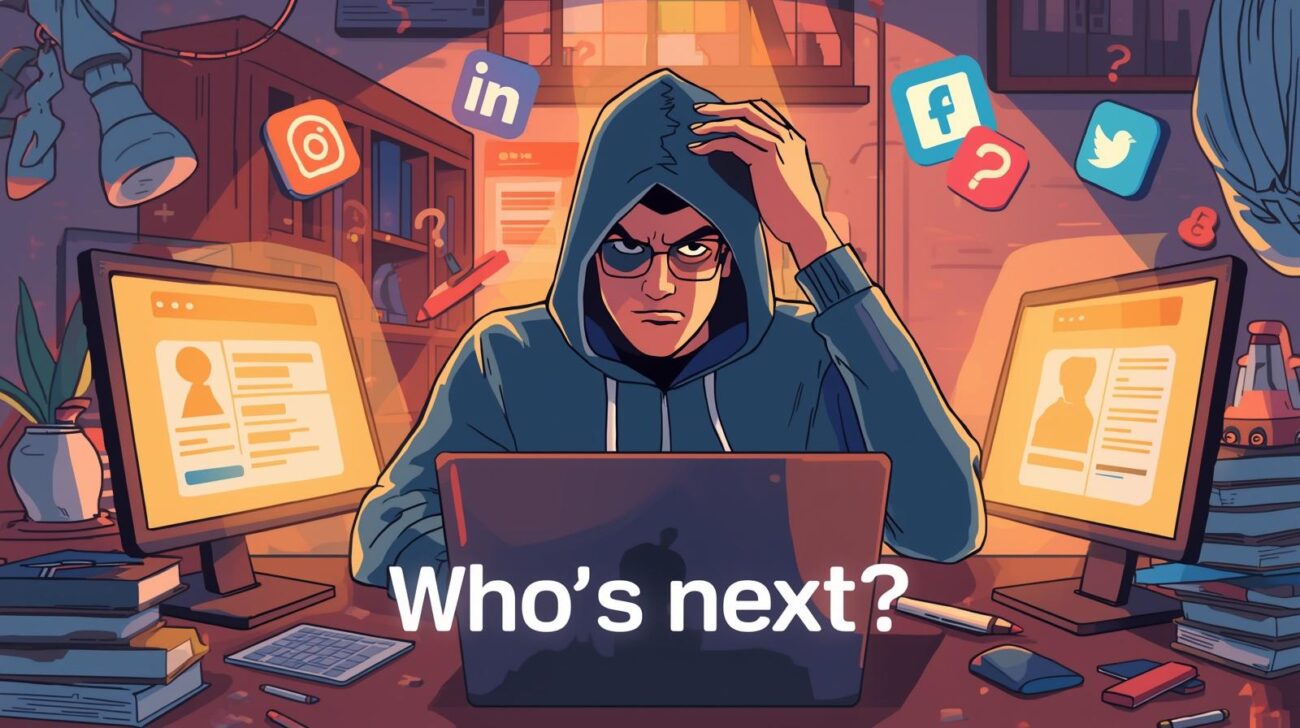
Cybercriminals don’t pick victims at random. Every attack is calculated, based on research, psychology, and opportunity. Understanding their mindset is the first step to staying safe.
In this article, we’ll break down how hackers choose their targets, the techniques they use, and what you can do to avoid becoming one.
Step 1: Reconnaissance – Gathering Information
Before launching an attack, hackers start with OSINT (Open Source Intelligence). They scour:
- Social media profiles
- Company websites
- Job postings
- Public forums
Why? Because every detail—your tech stack, email format, or even hobbies—can help craft a convincing phishing email.
Example:
A hacker sees your LinkedIn post about migrating to a new cloud platform. They now know your environment and can send a fake “cloud migration update” email.
Step 2: Profiling the Target
Next, attackers profile individuals or organizations:
- Job titles (CFO, HR Manager = high-value targets)
- Access level (admins, finance teams)
- Behavioral patterns (active on LinkedIn, sharing updates)
They look for people who can be manipulated or have access to sensitive data.
Example:
An HR manager is often targeted because they handle payroll and employee data—perfect for identity theft or financial fraud.
Step 3: Identifying Weak Points
Hackers then hunt for vulnerabilities:
- Outdated software
- Weak passwords
- Exposed credentials on the dark web
- Misconfigured cloud services
This step often involves automated scanning tools to find easy entry points.
Example:
A company using an old version of WordPress becomes an easy target for injection attacks.
Step 4: Exploiting Human Psychology
Technology isn’t the only weakness—humans are the biggest vulnerability.
Attackers use:
- Phishing emails with urgency (“Your account will be locked!”)
- Fake job offers or invoices
- Social engineering via LinkedIn or WhatsApp
They exploit trust, fear, and curiosity to make you click.
Example:
A hacker sends a fake LinkedIn message offering a lucrative job, asking you to “verify your details” on a malicious site.
Step 5: Launching the Attack
Once weaknesses are confirmed, hackers deploy:
- Malware or ransomware
- Credential theft
- Business email compromise (BEC)
At this stage, the victim is already compromised.
Example:
After gaining access to an employee’s email, attackers send fake invoices to vendors, redirecting payments to their accounts.
How to Stay Off a Hacker’s Radar
- Limit personal info online
- Regularly update software
- Use strong, unique passwords
- Train employees on phishing awareness
Conclusion: Think Like an Attacker to Stay Safe
Hackers think strategically. They research, profile, and exploit weaknesses—both technical and human. By understanding their process, you can anticipate threats and strengthen your defenses.
