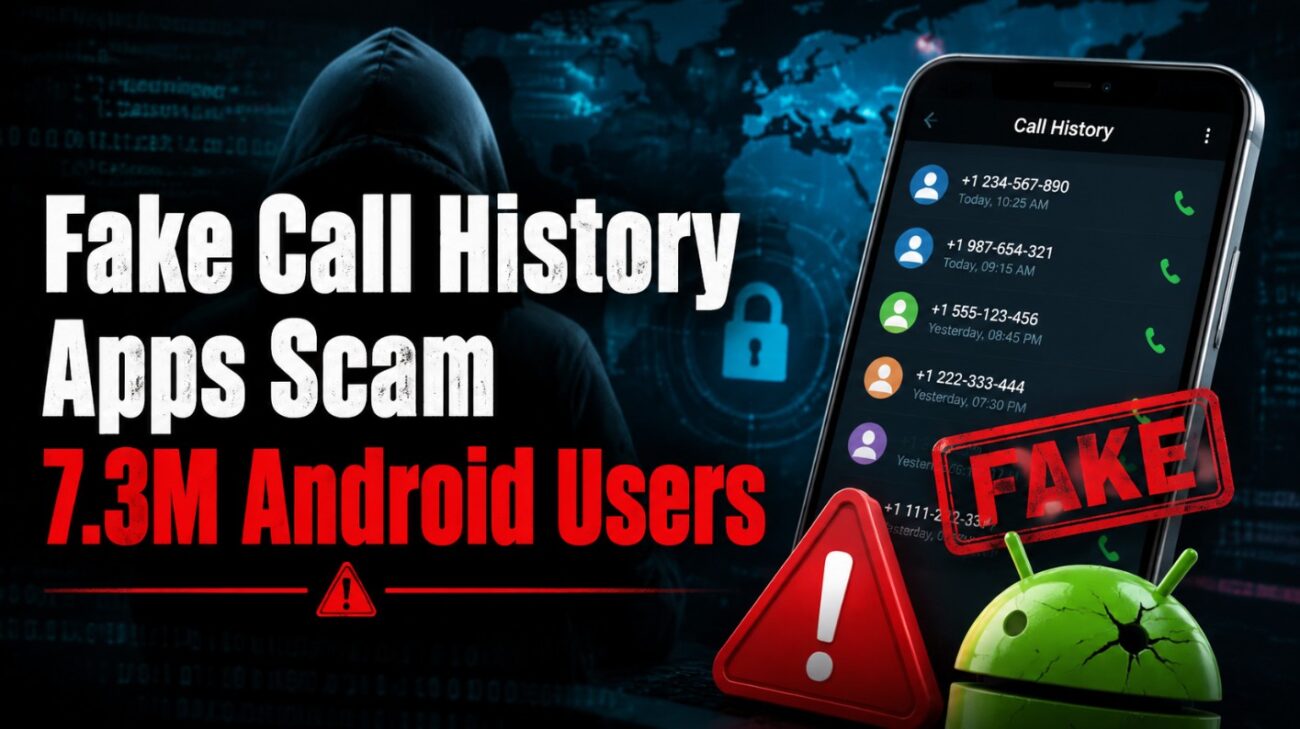
A new large-scale Android scam campaign has exposed millions of users to financial fraud, leveraging curiosity as its main weapon. Security researchers uncovered 28 fake “call history” apps on Google Play, which collectively amassed over 7.3 million downloads before being taken down.
These apps, now tracked under the name CallPhantom, promised something highly tempting: the ability to view the call history of any phone number. What users actually received was fabricated data—and in many cases, a direct financial loss.
The Simple Hook That Tricked Millions
The success of this campaign comes down to one powerful factor: human curiosity.
Users were shown what appeared to be partial call history results, making the service look legitimate. To access the “full report,” they were prompted to pay.
But here’s the catch:
👉 The entire dataset was fake from the start.
There was never any real capability to access call logs, SMS, or WhatsApp data from another device. The apps were designed solely to create illusion + trigger payment.
How the CallPhantom Apps Worked
Despite having different names and designs, all 28 apps followed the same core model:
- User enters a phone number
- App displays partial fake results
- User is prompted to pay for full access
- Payment is completed
- No real data is ever delivered
There were two major variants observed:
1. Pre-Generated Fake Data Model
- Hardcoded names and call logs inside the app
- Random numbers used to simulate realism
- Users shown “preview” results immediately
2. Email Delivery Scam Model
- Users asked to enter email
- Promised results via email after payment
- No data generated or delivered at all
The Monetization Strategy: Smart and Deceptive
The attackers used multiple payment methods to maximize profit and avoid detection:
- Google Play billing system (for legitimacy)
- UPI payments (widely used in India)
- In-app card payment forms (violating Play policies)
Some apps even dynamically fetched payment details from cloud databases, allowing attackers to switch accounts quickly and avoid tracing.
💰 Subscriptions ranged from weekly plans to yearly charges, with some users paying up to $80 for fake data.
How They Bypassed Refunds
One of the most calculated tactics in this campaign was avoiding refund mechanisms.
- Payments through Google Play could sometimes be refunded
- But payments via UPI or direct card entry? ❌ No guaranteed recovery
This left victims dependent on banks or payment providers, with very low chances of reimbursement.
Fake Notifications: Keeping the Pressure On
Some apps went even further by using deceptive push notifications.
Users received alerts that looked like real email messages, claiming their call history results were ready.
👉 Clicking the notification redirected them straight to a subscription payment page
This tactic increased conversion rates even after users initially hesitated.
Who Was Targeted?
The campaign primarily targeted:
- Android users in India
- Broader Asia-Pacific markets
Many apps came pre-configured with India’s country code, and integrated UPI support to match local payment habits.
Why This Attack Was So Effective
This campaign worked because it combined:
- ✅ High-demand functionality (call tracking curiosity)
- ✅ Legitimate distribution channel (Google Play)
- ✅ Psychological pressure (partial results + urgency)
- ✅ Weak refund paths (non-Google payments)
It wasn’t just malware—it was behavior-driven fraud at scale.
Real Risk: It’s Not Just Money
While financial loss is the primary impact, there are broader concerns:
- Data exposure risk from user inputs
- Potential misuse of email IDs and phone numbers
- Trust erosion in app ecosystems
And perhaps most importantly:
👉 It shows how easily users can be manipulated using false promises + partial data previews
Key Red Flags to Watch For
Before installing any app, watch for these warning signs:
- Apps claiming to access private data of others
- Features that seem technically unrealistic
- Vague or manipulated screenshots
- Suspicious payment prompts
- Poor or overly generic user reviews
How to Stay Protected
To avoid falling for similar scams:
- Never trust apps promising access to others’ private data
- Verify developer credibility before installing
- Read negative reviews carefully (not just ratings)
- Avoid external payment prompts inside apps
- Stick to official billing channels whenever possible
Security Takeaway
This campaign highlights a critical truth:
👉 Not all threats are malware—some are pure manipulation.
The CallPhantom apps didn’t hack systems…
They hacked human behavior.
Conclusion
With over 7.3 million downloads, this incident proves that even official app stores are not immune to large-scale fraud campaigns.
For users, the lesson is simple:
If an app promises something too invasive or too good to be true—it probably is.
For security teams, this is a clear signal that user awareness and behavioral analysis are just as important as technical controls.
