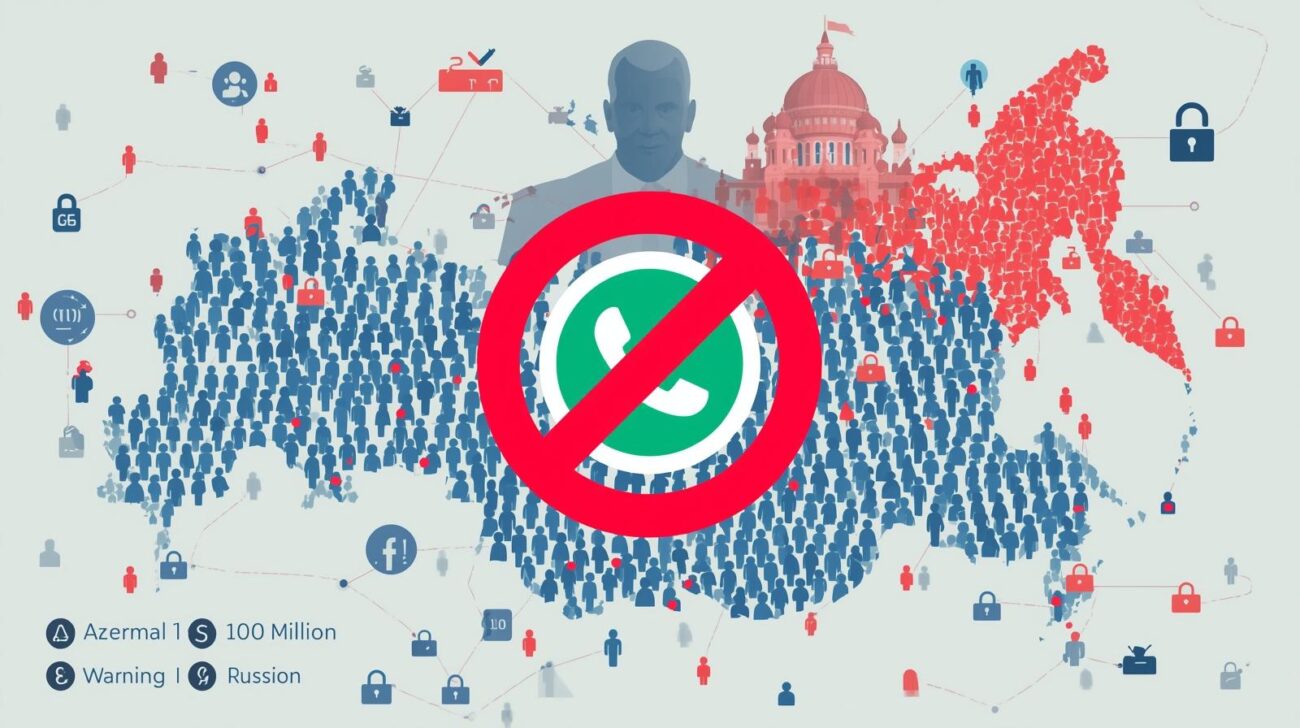
In early February 2026, the Russian government attempted to block WhatsApp nationwide, affecting over 100 million users. Meta, the app’s owner, condemned the move, stating that it threatens private communication and forces users onto the Kremlin-backed MAX app, a platform critics warn is designed for surveillance.
This development highlights the growing intersection of government control, digital privacy, and cybersecurity, particularly in nations pursuing “sovereign internet” strategies. In this article, we’ll explore what happened, why it matters, and how users can protect themselves.
What Happened
On February 11, 2026:
- Russia’s internet regulator, Roskomnadzor, removed WhatsApp from the national online directory.
- Users reported widespread outages, including failed messages and blocked voice/video calls.
- VPN usage surged as citizens tried to bypass the restriction.
This escalation mirrors prior measures targeting voice services, and follows Russia’s post-2022 tech crackdown. Analysts interpret this as part of Moscow’s sovereign internet strategy, aiming to shift traffic from global platforms to domestic alternatives.
The MAX App: Russia’s Surveillance-Focused Alternative
The Kremlin-backed MAX app, inspired by China’s WeChat, combines:
- Messaging and calls
- Government services access
- Banking and document storage
Unlike WhatsApp’s end-to-end encryption, MAX potentially allows real-time monitoring by authorities, creating serious cybersecurity and privacy vulnerabilities.
Risks to Users
- Data interception: Authorities could access private chats, calls, and sensitive files.
- Targeted attacks: Users are exposed to phishing and malware campaigns through unvetted state apps.
- Suppression of dissent: Encrypted communication becomes harder to maintain, impacting human rights.
Parallel Restrictions on Other Platforms
- Telegram: Russia plans additional limits on this popular encrypted messenger.
- Signal and FaceTime: Previously blocked under similar “sovereign internet” measures.
- VPN throttling: Regulators are actively limiting secure circumvention methods.
Human Rights Watch notes that these measures represent a growing legal framework to isolate Russian users from the global internet.
User and Security Implications
For 97–100 million WhatsApp users in Russia:
- Privacy risks increase: End-to-end encryption cannot protect messages if users are forced onto unencrypted alternatives.
- Cyber threats rise: Unofficial or state-run apps may carry spyware or phishing vulnerabilities.
- Digital freedom is constrained: VPN restrictions limit secure access to global information.
Protective Measures
- Use VPNs wisely: Select trusted providers and monitor for throttling or connection failures.
- Enable Multi-Factor Authentication (MFA): Protect accounts from unauthorized access.
- Consider alternative encrypted messaging apps: Evaluate options outside state control.
- Educate about phishing risks: State-run apps may carry deceptive or malicious prompts.
- Stay informed: Follow reliable sources for updates on platform availability and restrictions.
Expert Insights
- Cybersecurity Perspective: Blocking global platforms while promoting state-controlled alternatives heightens attack surfaces for targeted hacks.
- Privacy Risks: MAX’s integration with government services could allow mass surveillance and real-time monitoring.
- Digital Freedom: The restrictions represent a tech-driven erosion of privacy and free expression, raising alarms for human rights and cybersecurity observers worldwide.
FAQs
Q1: Why did Russia block WhatsApp?
A: To force users onto the Kremlin-backed MAX app and limit encrypted communication.
Q2: Is WhatsApp still accessible?
A: Only via VPNs or other circumvention tools; widespread outages have been reported.
Q3: Are other messaging apps affected?
A: Telegram faces additional restrictions; Signal and FaceTime have previously been blocked.
Q4: How can users stay secure?
A: Use VPNs, enable MFA, and avoid unverified state-run apps for sensitive communications.
Q5: What are the risks of switching to MAX?
A: MAX could allow government surveillance, phishing attacks, and data interception.
Conclusion
Russia’s WhatsApp block illustrates the fragility of digital communication in authoritarian regimes. While Meta continues to fight for encrypted access, Russian users face heightened privacy risks, potential surveillance, and limited access to secure global platforms.
Key Takeaways:
- End-to-end encryption is critical for privacy; state-run alternatives may not provide it.
- VPNs and MFA are essential tools for protecting accounts under restrictions.
- Users should remain vigilant against phishing and malicious apps.
Next Step: Russian users should prioritize secure communication methods and stay informed on developments in sovereign internet policies.
