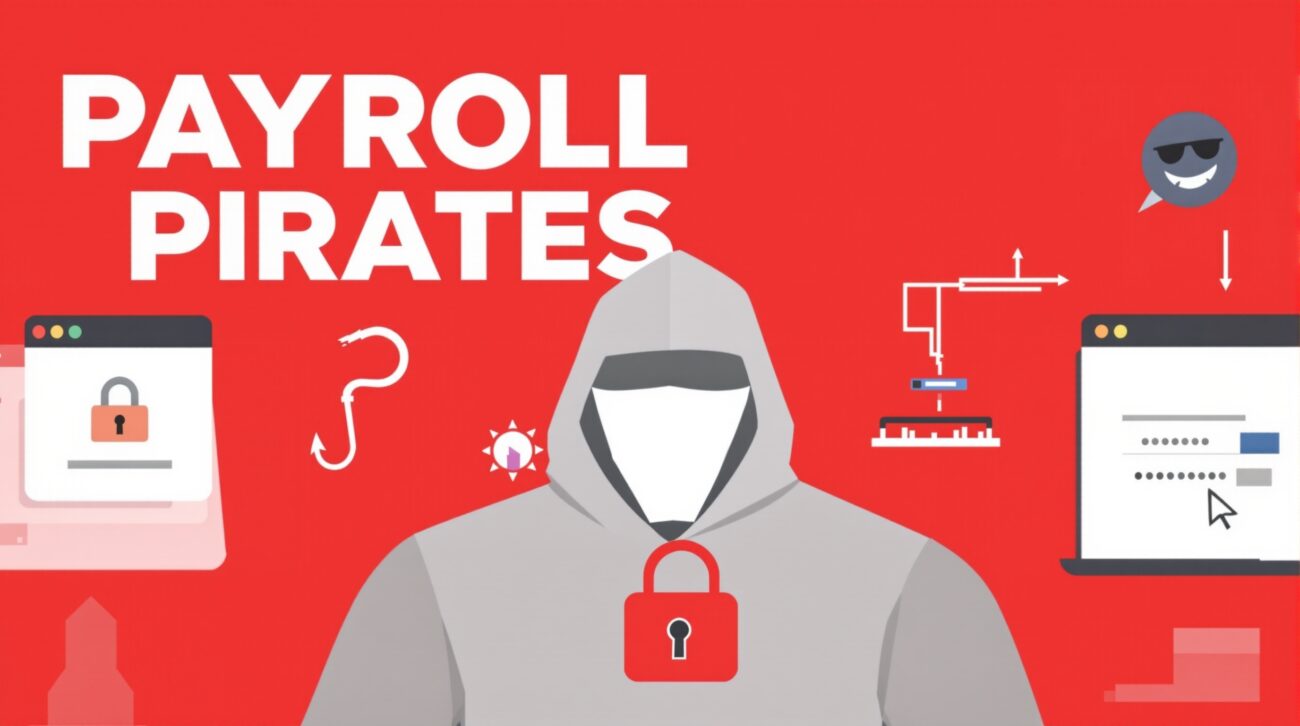
Cyber threats are evolving rapidly, and attackers are finding new ways to reach victims. One of the most alarming examples is a financially motivated cybercrime network known as Payroll Pirates, which has been targeting payroll systems, credit unions, and trading platforms across the United States since mid-2023.
The Attack Vector: Malvertising
The group’s weapon of choice is malvertising—malicious advertisements placed on search engines that trick users into visiting phishing websites. Here’s how it works:
- Employees search for their company’s HR or payroll portal.
- Sponsored ads appear at the top of search results, mimicking legitimate payroll services.
- Clicking the ad redirects users to a phishing page that looks identical to the real login portal.
- Once credentials are entered, attackers steal the information and reroute salary payments to their own accounts.
This organized operation has grown significantly, targeting over 200 platforms and compromising more than 500,000 users.
Evolution of the Campaign
- Initial Phase (Mid-2023):
Attackers used Google Ads to promote fake payroll websites. Check Point researchers discovered the campaign in May 2023 after spotting multiple phishing sites imitating payroll platforms. - Collaboration Among Groups:
The investigation revealed that different threat actors were sharing tools and techniques but operating separate domains for credential collection. - Temporary Pause & Resurgence:
By November 2023, attacks slowed down. However, in June 2024, the campaign returned with advanced capabilities, including real-time two-factor authentication bypass.
How They Defeat 2FA
The updated phishing kits introduced Telegram bots that interact with victims in real time:
- When a user enters their password, the bot immediately requests verification codes or answers to security questions.
- Operators receive instant notifications and guide victims through the process, making detection nearly impossible.
The backend infrastructure also evolved:
- Hidden PHP scripts with generic names like
xxx.php,check.php, andanalytics.phptransmit stolen data silently. - Encrypted communication channels prevent network monitoring tools from detecting exfiltration.
Dynamic Phishing Kits
These kits adapt to the target platform’s security measures:
- If the real site uses email verification, the phishing page loads an email form.
- If mobile authentication is required, the page requests the one-time code.
- This dynamic approach ensures attackers can bypass multiple layers of security.
Why This Matters
The Payroll Pirates campaign demonstrates how malvertising combined with real-time social engineering can defeat traditional security measures. Organizations must:
- Educate employees about phishing risks.
- Monitor ad networks for fraudulent campaigns.
- Implement advanced threat detection for credential theft attempts.
Key Takeaways
- Malvertising is becoming a major attack vector for credential theft.
- Real-time phishing kits can bypass 2FA using Telegram bots.
- Hidden scripts and encrypted channels make detection extremely difficult.
- Over 500,000 users have been impacted since mid-2023.
Conclusion
Cybercriminals are innovating faster than ever. The Payroll Pirates campaign is a wake-up call for businesses to strengthen their defenses against malvertising and real-time phishing attacks. If your organization relies on payroll or financial platforms, now is the time to review your security posture.
Stay vigilant. Stay secure.
